Spray polyurethane foam combines insulation and air sealing in one applied system—helping create efficient, comfortable, and resilient building envelopes.
Three defining advantages
Performance beyond a traditional batt
Unlike fibrous insulation, spray foam expands and adheres in place. That difference allows it to address air movement, thermal resistance, and—when closed-cell foam is specified—assembly strength.
Thermal performance & air sealing
Spray foam expands into cracks, penetrations, and irregular cavities, creating a continuous air barrier as it insulates. Controlling both conductive heat transfer and air leakage can reduce heating and cooling demand.
Structural resilience
High-density closed-cell foam bonds framing and sheathing into a more unified assembly. Research cited in the guide reports substantially increased racking strength, while the rigid bond can also help resist roof-deck wind uplift.
Long-term building value
A tighter enclosure can lower utility use, reduce HVAC cycling, and may allow properly designed projects to use smaller mechanical equipment. These operating savings can help offset the higher initial installation cost over time.
Comfort & sound control
Limiting uncontrolled air movement can reduce drafts and uneven temperatures. Open-cell foam’s softer, porous structure also provides strong sound attenuation for interior walls, rooflines, and other suitable assemblies.
Applied as a continuous layer
Insulation that reaches the gaps
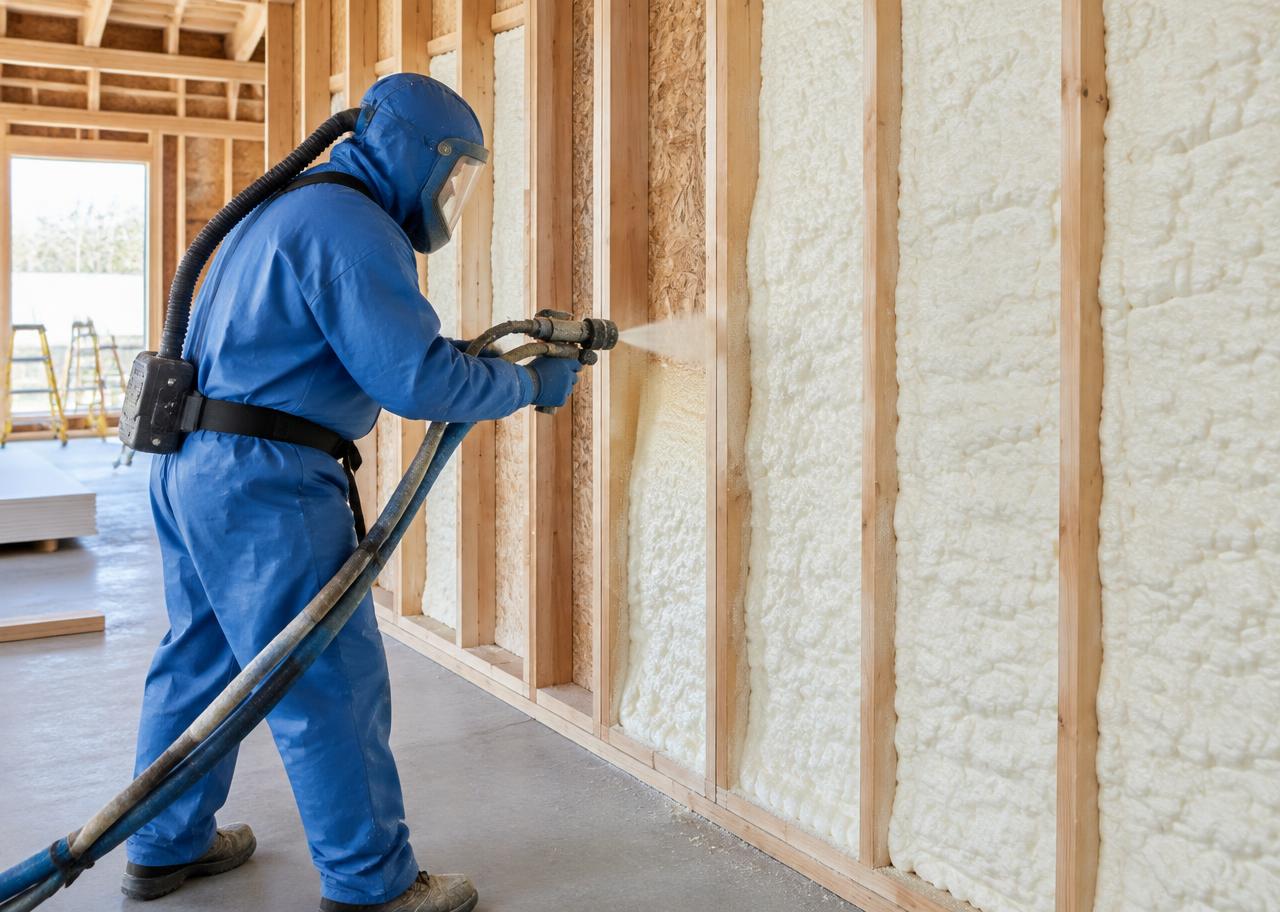
Installed by trained professionals, spray foam expands around framing and penetrations where traditional materials can leave pathways for uncontrolled air movement.
Choose for the assembly
Open-cell and closed-cell foam serve different needs
Lower-density foam
Open-cell
Open-cell foam expands significantly, seals air effectively, and is vapor permeable. It typically delivers approximately R-3.5 to R-3.8 per inch and performs especially well where sound control and a breathable assembly are priorities.
• Effective air sealing in suitable interior applications
• Strong sound attenuation
• Lower material density and cost than closed-cell foam
• Not intended for persistent moisture or below-grade exposure
High-density foam
Closed-cell
Closed-cell foam forms a dense, rigid layer that provides approximately R-5.8 to R-7.4 per inch. At the required thickness, it can resist both air and water-vapor movement while adding strength to framed assemblies.
• High R-value where cavity depth is limited
• Rigid bond can strengthen walls and roof assemblies
• FEMA Class 5 flood damage-resistant material
• Requires careful moisture assessment before application
Upfront cost comparison
What the higher price actually buys you
Yes—spray foam costs more per square foot than fiberglass batt. But fiberglass is sold by the roll; spray foam is performance by the square foot: insulation, air sealing, and—in closed-cell—the strength of the wall itself, delivered in one application.
Fiberglass only slows heat passing through it. Spray foam insulates and air-seals in a single applied layer—closing the leaks fiberglass can never reach.
It stays where you put it
Batts can sag, settle, and leave gaps over time, quietly eroding performance. Foam adheres in place for the life of the assembly.
Pays you back every month
A tighter envelope means less conditioned air escaping, shorter HVAC run times, and lower utility bills—savings that compound year after year.
The takeaway: compare what each dollar delivers. A fiberglass batt fills a cavity; spray foam finishes the envelope. Over the life of the building, the higher initial investment is what keeps working for you.
A complete envelope
Comfort starts with continuity
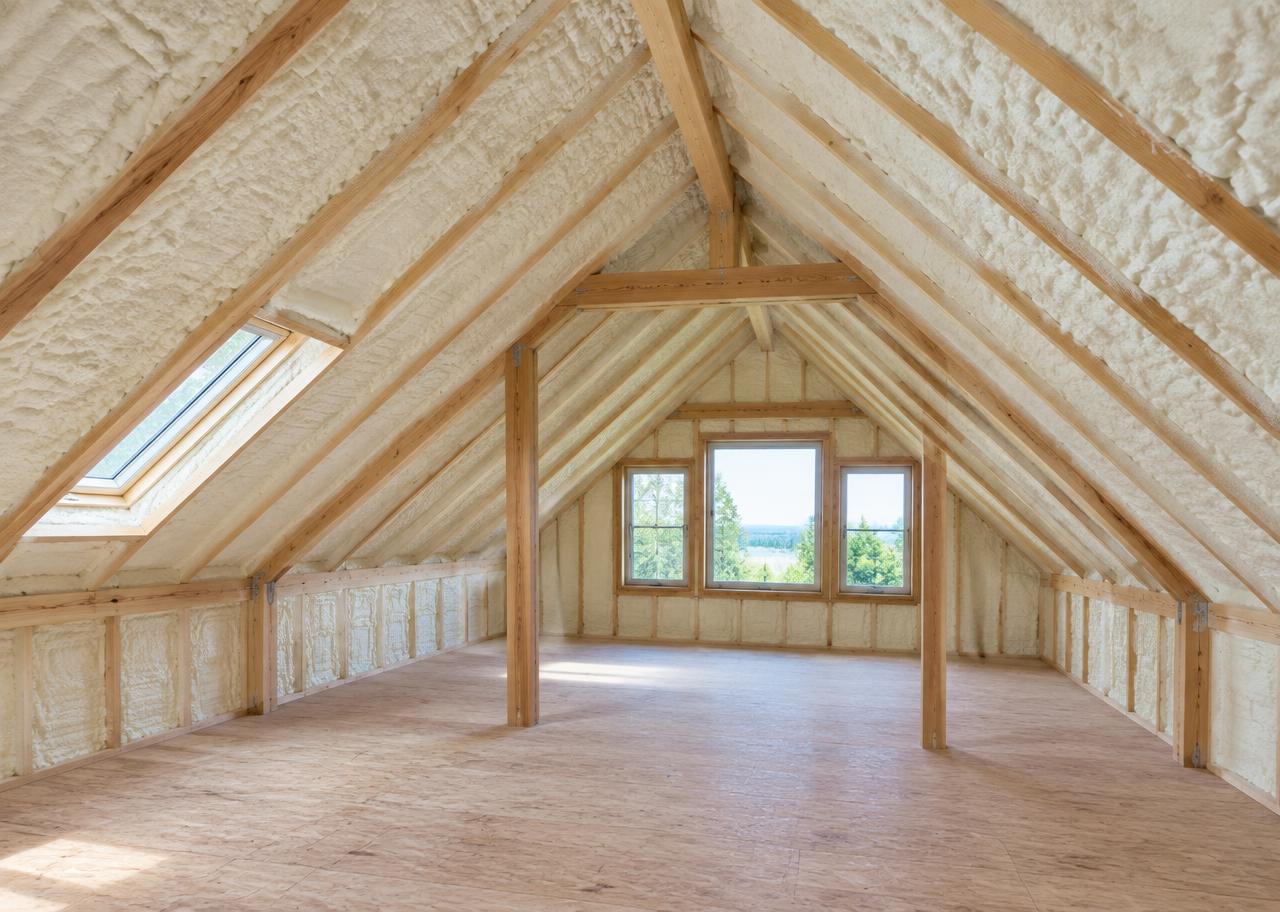
A carefully detailed foam layer follows rooflines and framing to limit the drafts and temperature swings caused by uncontrolled air leakage. Product selection and assembly design must still account for climate, vapor control, and drying potential.
The full value
Evaluate total ownership—not insulation alone
Spray foam generally costs more upfront than fiberglass or cellulose because it requires specialized equipment, conditioned materials, and trained crews. Its value comes from combining several envelope functions and reducing energy loss over the building’s service life.
Lower operating demand
A continuous air barrier can reduce HVAC run time, utility consumption, drafts, and temperature swings.
Greater resilience
Correctly specified closed-cell foam can support wind, moisture, and flood-resilient construction strategies.
Professional installation is essential
Important project considerations
Spray foam is an engineered system created on site through a temperature-sensitive chemical reaction. The substrate must be dry and properly prepared, the foam must be mixed and applied within manufacturer specifications, and the complete wall or roof assembly must be designed to manage moisture and drying.
Moisture
Applying foam over damp materials can trap moisture and lead to mold, decay, or structural damage.
Fire protection
Approved thermal or ignition barriers and code-compliant assemblies may be required.
Application safety
Trained installers, full protective equipment, ventilation, and controlled re-entry times are critical.
Performance varies by product, climate, assembly, thickness, and installation quality. Always follow manufacturer documentation and applicable building, fire, and safety codes.